
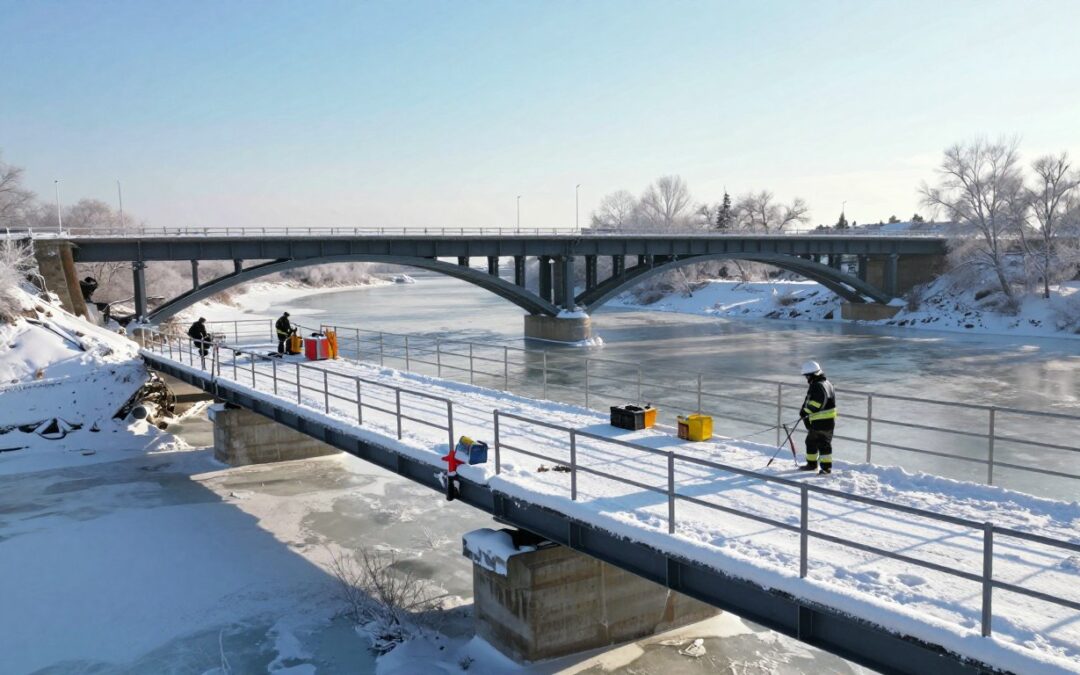
As the cold winds start to blow and the days become shorter, it’s time to get ready for the winter months. But have you thought about how to keep your bridges safe and working well during this time?
It’s important to adjust our maintenance workflows for winter. We need to pick the best bridge inspection equipment that can handle the cold. This way, we can keep the bridge safe and ensure everyone’s safety.
Good maintenance planning is key. For example, AI-driven scheduling can make things more efficient and cut down on delays. As I get our workflows ready for winter, I know how important it is to be ready for the season’s challenges.
Key Takeaways
- Adapting maintenance workflows for winter conditions is vital for safety and efficiency.
- The right bridge inspection equipment can withstand harsh winter environments.
- Effective maintenance scheduling, such as AI-driven scheduling, can improve efficiency.
- Preparing for winter challenges is essential for maintaining bridge integrity.
- Using the right equipment and strategies can reduce downtime and improve safety.
Challenges of Winter Bridge Maintenance
Winter brings tough conditions for bridge upkeep. The cold weather and ice make it hard to keep bridges safe. Special tools and strict safety rules are needed to keep bridges in good shape.
Weather-Related Obstacles
Winter weather is a big problem for bridge upkeep. The cold and snow make it hard to see and get to the bridges. Equipment can also be affected by the cold.
Temperature Effects on Equipment
The cold can make metal parts of work platforms weak. This can cause them to break. Using special fluids in the equipment’s hydraulics can help.
Visibility and Access Issues
It’s hard to get to bridges when it’s snowy and icy. “The snow removal industry faces many challenges,” an article on keeping bridges stable notes.
Safety Concerns for Maintenance Crews
Keeping maintenance crews safe is very important in winter. They face dangers like slipping and falling. They need special gear and rules to stay safe.
Fall Protection in Icy Conditions
Crews wear special shoes and harnesses to avoid falls. They also get training on working in the cold.
Cold Weather Work Protocols
Having rules for working in the cold helps keep crews safe. This includes taking breaks in warm places and watching the weather. For more on bridge upkeep, check out Trimble’s blog.
Winter Bridge Maintenance Platforms: Adaptations and Solutions
As winter comes, it’s key to make bridge maintenance platforms ready for the cold. We’ve come up with many ways to adapt and solve the problems of winter maintenance.
Weatherproofing Elevated Work Platforms
Keeping elevated work platforms safe from the weather is a must in winter. We add insulation and heating systems to keep them working even when it’s freezing.
Insulation and Heating Systems
Insulation keeps the platform warm, and heaters make sure the equipment works. This is very important for bridge maintenance access systems that face harsh winter weather.
Anti-Freeze Hydraulic Systems
Anti-freeze hydraulic systems are also key. They make sure the hydraulic parts don’t freeze, keeping the platforms working.
Specialized Attachments for Snow and Ice Removal
Special attachments are needed to remove snow and ice from bridges. These include de-icing equipment integration and snow clearing capabilities. They’re essential for keeping bridges safe and open.
De-Icing Equipment Integration
We add de-icing equipment to the platforms. It helps remove ice from bridge surfaces, lowering the risk of accidents.
Snow Clearing Capabilities
Snow clearing is also vital. It lets maintenance crews quickly clear snow, keeping access and safety open.
Bridge Maintenance Access Systems for Winter
Our bridge maintenance access systems are built to handle winter. They have under-bridge units with winter modifications and stabilization systems for icy surfaces.
Under-Bridge Units with Winter Modifications
Under-bridge units are made to work well in winter. They have better traction systems for icy surfaces, as shown in a study on winter maintenance practices.
Stabilization Systems for Icy Surfaces
Stabilization systems are key for safety on icy bridges. They give maintenance crews the stability they need to do their jobs safely.
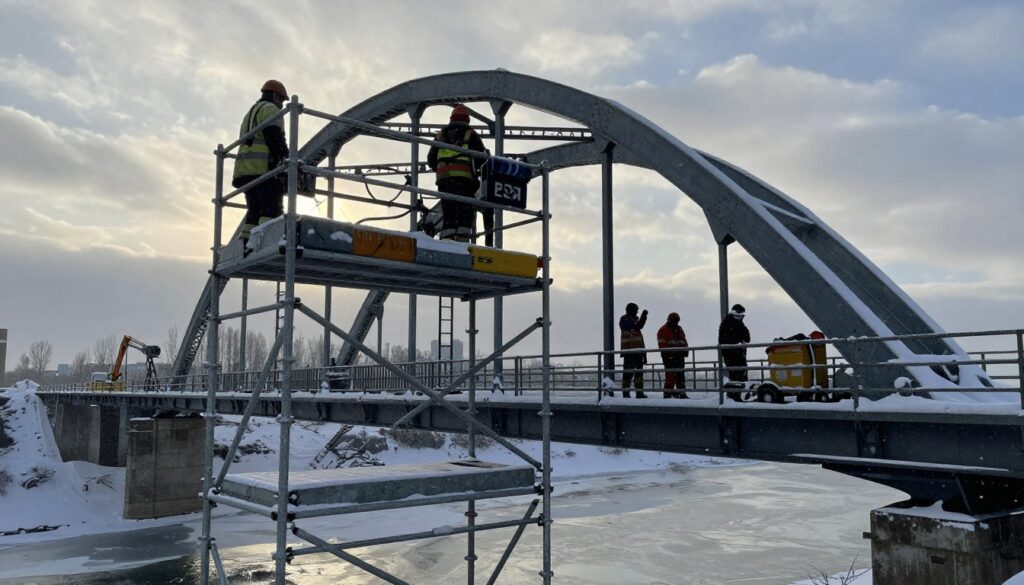
My Winter Maintenance Workflow Best Practices
To handle winter bridge maintenance, we follow best practices. These ensure our crew’s safety and the bridge’s durability.
Pre-Season Equipment Preparation
We prepare our equipment for winter early on. We use winterization checklists to check everything is ready.
Winterization Checklists
Our checklists cover all important equipment maintenance. This includes engine and hydraulic system checks. It helps avoid equipment failure in winter.
Cold Weather Testing Procedures
We test our equipment in cold weather. This cold weather testing is key to finding any issues early.
During-Season Maintenance Schedules
During winter, we stick to maintenance schedules tightly. This includes daily checks and emergency plans.
Daily Inspection Requirements
Our daily checks are thorough. They cover all our equipment and platforms. This helps us fix problems quickly and avoid downtime.
Emergency Response Planning
We have detailed emergency response plans. They cover equipment failure and severe weather. For more on emergency planning, see this guide.
Crew Training for Winter Operations
Training our crew for winter is a big focus. We teach them about cold weather safety and equipment-specific winter training.
Cold Weather Safety Protocols
Our safety protocols protect our crew from winter dangers. This includes hypothermia and frostbite. We also stress the need for safety with under bridge platforms.
Equipment-Specific Winter Training
We give equipment-specific winter training. This ensures our crew can use our platforms and equipment safely in cold weather. For more on our equipment, visit our website.
Conclusion
Keeping our bridges safe and sound during winter is very important. We need to understand the challenges winter brings. Then, we can find the right ways to keep our bridges in good shape.
Using the right tools for winter bridge care is essential. This includes special equipment for checking and maintaining bridges. The Bridge Maintenance Manual shows us how to do this right. It covers everything from removing snow and ice to making sure water drains away.
By using these new methods and ideas, we can make our winter bridge care better. This means our crew and everyone who travels will be safer. It also helps our bridges last longer.
Recent Comments