
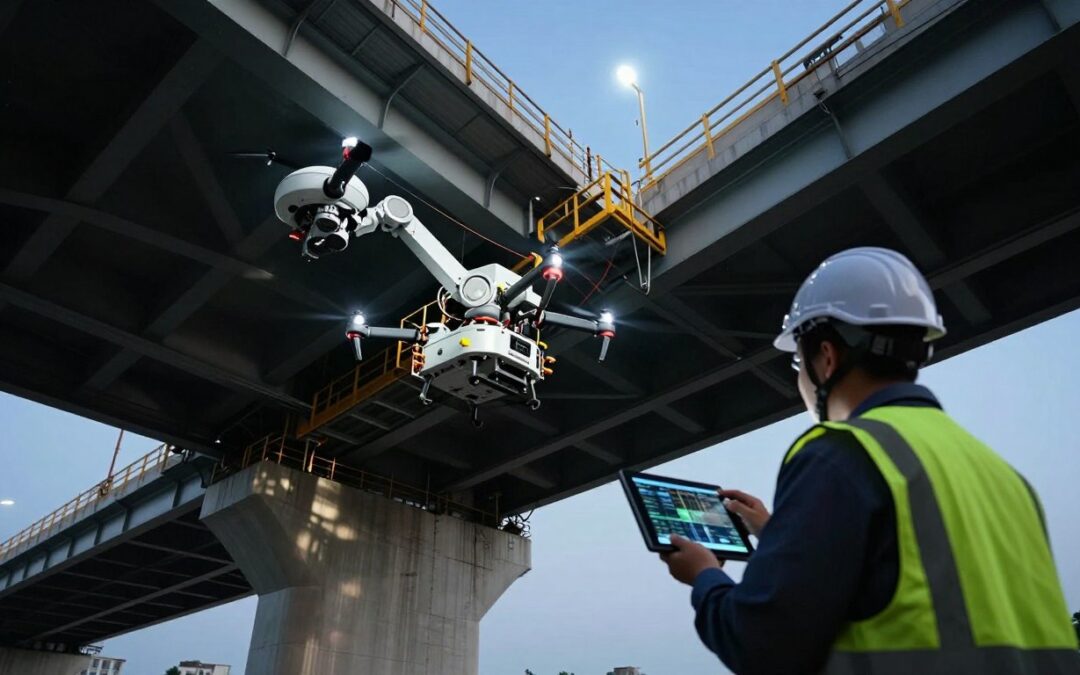
Can advanced AI bridge inspection technologies truly replace the need for human access under bridges? As the nation’s bridges age and deteriorate, accurate and efficient inspection methods are more critical than ever.
A team from Carnegie Mellon University used the Bridges-2 supercomputer to create an AI-powered bridge-inspection system. This system lets artificial intelligence learn from experienced engineers. While this is a big step forward in robotic bridge inspections, it shows a key truth: human judgment and physical inspection are vital. For more on technology’s role in under-bridge inspection, check out this resource.
Key Takeaways
- The limitations of automated inspection systems necessitate human access under bridges.
- AI and robotics are transforming bridge monitoring, but human judgment remains essential.
- Advanced technologies like robotic bridge inspections complement human inspection, not replace it.
- The synergy between technology and human expertise is key for effective bridge maintenance.
- Under-bridge platforms provide stable access for detailed examinations and sample collection.
The Current State of Bridge Inspection Technology
The world of bridge inspection is changing fast. This is thanks to AI and robotics. They make inspections safer, more efficient, and cheaper.
The Promise of AI and Robotics in Bridge Monitoring
AI and robotics are making big changes in bridge monitoring. Automated bridge inspection systems can spot problems accurately. This means less need for manual checks, making things safer and more efficient.
How Drones and Smart Sensors Are Changing the Game
Drones with smart sensors are leading this tech change. They can inspect bridges safely without needing scaffolding or direct access. This cuts costs and boosts safety. For example, drone bridge inspection takes clear pictures and data. AI then analyzes this to find possible issues.
| Technology | Benefits | Applications |
|---|---|---|
| AI-powered Inspection | Enhanced accuracy, reduced manual effort | Defect detection, anomaly identification |
| Drones with Smart Sensors | Improved safety, reduced costs | Bridge inspection, monitoring |
| Advanced Bridge Monitoring Systems | Real-time data, predictive maintenance | Bridge health monitoring, maintenance planning |
Why AI Bridge Inspection Under Bridge Platforms Stil Requires Human Access
AI drones can check many bridge areas, but they have limits. Human access is key for a full check.
Physical Limitations of Automated Inspection Systems
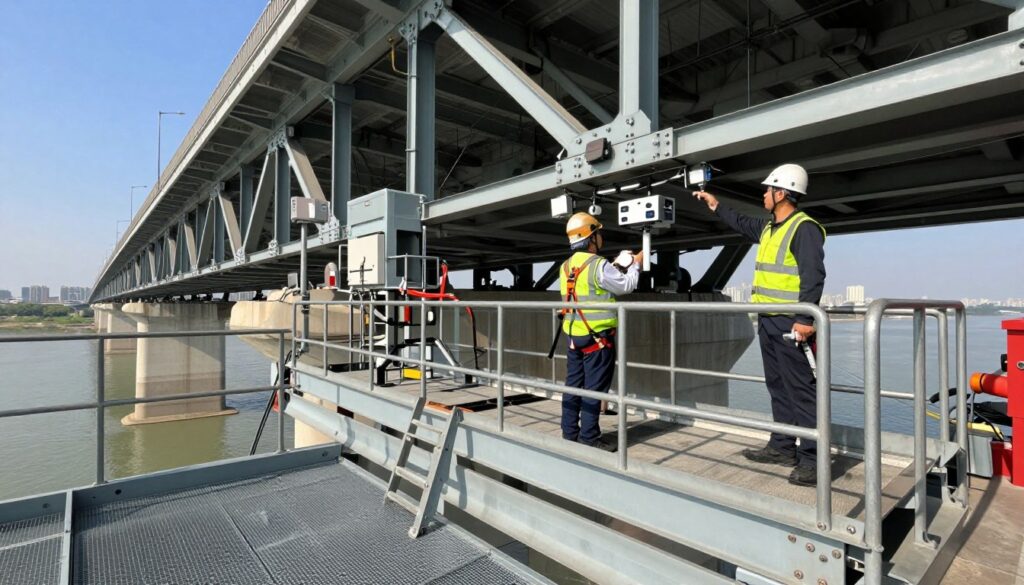
Automated systems, like drones, struggle to reach some bridge spots. These spots include tight areas or complex shapes. Under bridge platforms offer safe access for humans where drones can’t go.
The Irreplaceable Human Element: Touch and Judgment
Humans can judge and inspect in ways AI can’t. They can touch, feel, and make detailed judgments about a bridge’s state. This is vital for precise checks.
Safety-Critical Areas That Demand In-Person Verification
Some bridge areas need human checks because of safety. For example, checking bridge bearings or finding small damage signs needs humans. Smart bridge inspection solutions help, but human checks are essential.
As we improve bridge maintenance technology, mixing AI tools with human inspectors works best. For more on technology in bridge checks, visit The Role of Technology in Bridge Inspection and.
Conclusion: Finding the Right Balance for Safer Bridges
The future of bridge inspection is about finding a balance. This balance is between using AI technology and the wisdom of humans. AI bridge inspection under bridge platforms are changing the game, but humans are needed for under-bridge checks.
Robotic and automated systems are making bridge checks better and faster. But, they’re not meant to replace humans. Instead, they help humans do their job better.
Under-bridge platforms give safe access to hard-to-reach areas. They help with precise checks and collecting important data. As shown in industry reports, they’re used for more than just inspections. They’re also used for environmental monitoring and geotechnical work.
By using AI and human insight together, we can make bridges safer and maintenance more effective. As technology advances, we’ll see more AI and robotics in bridge checks. This will lead to better results and lower costs.
Recent Comments