
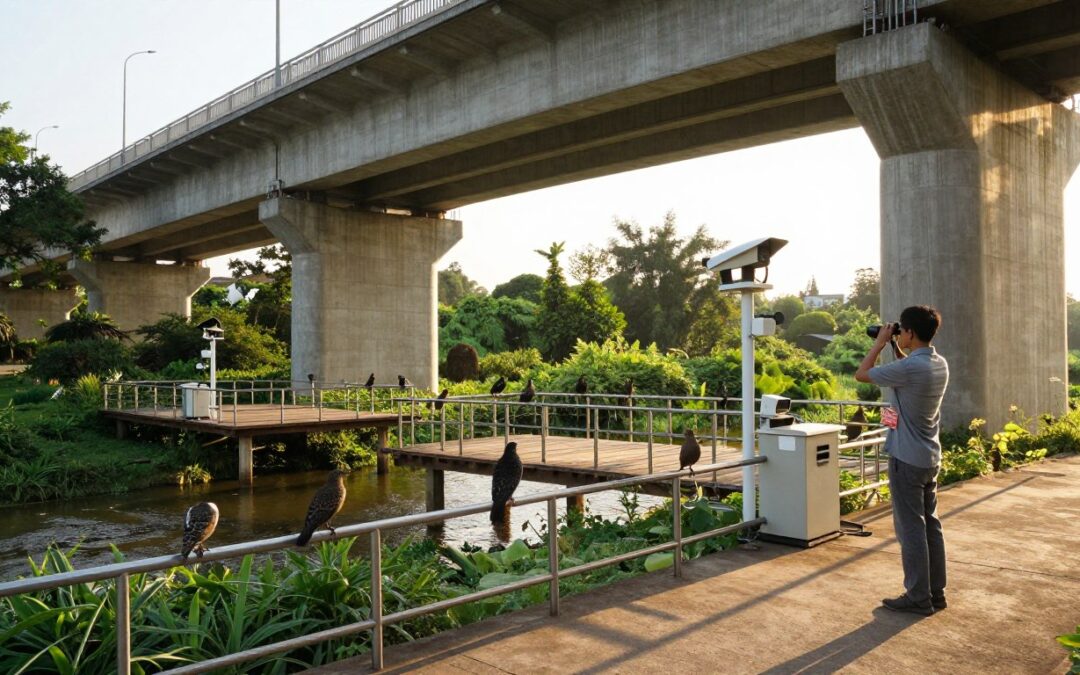
Have you ever wondered how researchers monitor wildlife habitats beneath bridges? I use under bridge platforms to study and monitor wildlife. This helps us understand their behavior and habitats. We also use fencing with over- or underpasses to keep wildlife safe.
Years of research have shown that these crossings are used often. For example, a study on the Trans-Canada Highway found that crossing structures reduce wildlife collisions. Under bridge access platforms also let researchers monitor wildlife habitats safely and well.
Key Takeaways
- Under bridge platforms facilitate safe and effective wildlife monitoring.
- Combining fencing with over- or underpasses helps keep wildlife safe.
- Research using hair snags and wildlife cameras has shown frequent use of crossing structures.
- Effective wildlife monitoring solutions reduce wildlife collisions.
- Under bridge access platforms support habitat studies and wildlife conservation.
My Journey into Under Bridge Platforms Wildlife Monitoring
I started exploring the wildlife under bridges out of curiosity. I soon learned how important under bridge monitoring systems are for these habitats.
Discovering the Method
I found this unique research method while looking into wildlife conservation technologies. Under bridge platforms help us study wildlife without harming their homes.
Essential Equipment and Safety Protocols
To monitor wildlife under bridges, we need the right tools and safety rules. This includes specialized access equipment for safe data collection.
Specialized Access Equipment
The under bridge inspection platforms changed how we study these areas. A study on PMC shows they offer a safe space for researchers.
Safety Certifications and Training
Researchers must get safety certifications and training for under bridge work. This training is key to keeping everyone safe and the data reliable.
Benefits of Accessing Wildlife Habitats from Below
Looking at wildlife from below gives us a special view of how animals act and how healthy their homes are. Under bridge platforms help researchers collect important data without messing up the natural world.
Minimal Disturbance to Natural Wildlife Behaviors
One big plus of using under bridge access is how little it bothers the animals. Unlike old ways that might disturb their homes or use too much equipment, these platforms let us watch without interrupting. This way, we get more reliable data and really understand how animals live naturally.
Year-Round Observation Opportunities
Under bridge platforms let us watch wildlife all year, no matter the weather or season. This steady watching is key for really getting to know wildlife and their homes. For example, a study showed that things like under bridge platforms make saving wildlife much better [1].
Accessing Usually Hard-to-Reach Ecosystems
Under bridge access lets us explore places that are hard or impossible to get to. This includes:
- Riparian zones, which are key for many animals’ survival
- Urban wildlife corridors, where people and animals meet
Riparian Zone Access Points
Riparian zones are super important for animals, giving them water, food, and shelter. By getting to these areas from under bridges, we can really study these special places. For more on why riparian zones matter, check out Pew Trust.
Urban Wildlife Corridor Monitoring
Urban areas have wildlife paths that are hard to watch because of people around. Under bridge platforms help us see how animals move and act in these special places. Learn more about under bridge platforms at Underbridge Platforms.
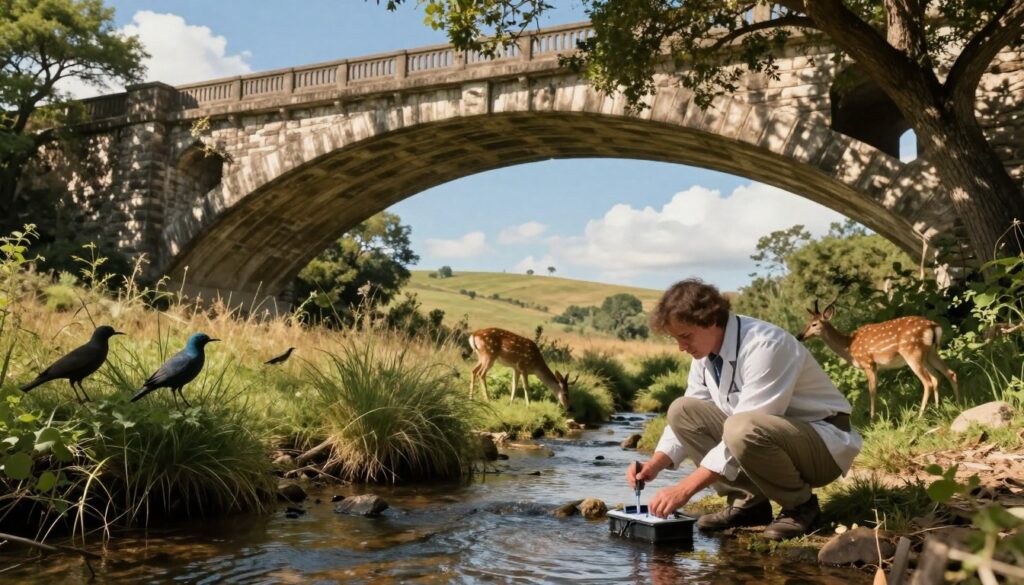
Using under bridge access for watching wildlife helps us understand ecosystems better and improve saving them. It’s very important to use wildlife monitoring tools in these places for good habitat checking and care.
Wildlife Species and Behaviors I’ve Documented
Through underpass monitoring for wildlife, I’ve learned a lot about creatures living in these areas. I’ve seen many different species that live in the riparian ecosystems.
Riparian Ecosystem Inhabitants
The under bridge platforms let me see many aquatic and semi-aquatic species. These animals love the moist places around the bridges.
Aquatic and Semi-aquatic Species
I’ve seen fish, frogs, and otters, all adapted to life in water. For more on bridge inspection and maintenance, check out Bridge Inspection Essentials.
Nesting Birds and Roosting Bats
Birds like swallows and bats nest and roost under bridges. They use these spaces for shelter, which is vital for their survival.
Seasonal Migration Patterns
My research has shown the migration patterns of many species. Some birds migrate through here at certain times, while others stay all year.
Predator-Prey Dynamics in Bridge Habitats
Watching predators and prey in these habitats is interesting. It shows that these ecosystems have complex food webs. Species like cougars and owls are important in these webs.
By studying these ecosystems through bridge ecology research, we learn more about their complex relationships.
Conclusion: Advancing Conservation Through Under Bridge Research
Reflecting on my journey, I see how vital under bridge research is for wildlife conservation. It helps us understand wildlife behavior and their needs. This knowledge is key to keeping wildlife populations healthy.
Studies show that wildlife bridges and underpasses cut down on animal-vehicle crashes. This makes roads safer for both animals and people. A Pew Research Center report highlights how these structures help wildlife move, making them more resilient during tough times. Learn more about wildlife migration conservation in the American West here.
Under bridge platforms can also become community gardens and green spaces. These areas can be turned into lively spots for growing food and enjoying nature. For more on using under-bridge platforms, visit Under Bridge Platforms.
By pushing forward with under bridge research, we can protect wildlife like grizzly bears and wolverines. This research helps us develop effective conservation plans. It ensures our ecosystems stay healthy for the long term.
Recent Comments