
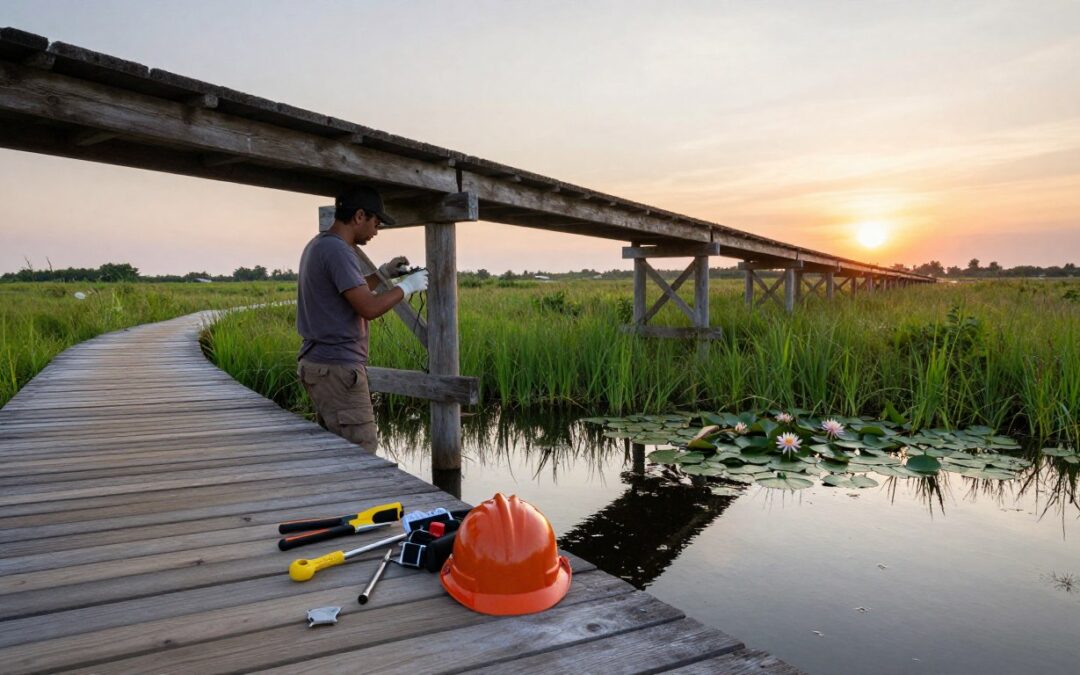
As I think about keeping our natural habitats safe, I often ask: Can we keep our bridges in good shape without hurting the wetlands around them? The key is to use green practices during bridge maintenance.
Struktis, a leader in parks and wetlands, makes eco-friendly bridges that last long and are good for the environment. They use smart ideas like under bridge inspection platforms to lessen the environmental footprint of bridge upkeep.
Research shows that well-planned bridge upkeep can greatly lessen harm to wetland ecosystems. For example, a study on the National Center for Biotechnology Information website stresses the need for environmental checks in bridge building.
Key Takeaways
- It’s vital to cut down on environmental harm during bridge upkeep in wetlands.
- Green bridge designs and eco-friendly methods can lessen environmental impact.
- Smart tools like under bridge inspection platforms help protect natural areas.
- Good planning and doing bridge upkeep right are key to avoiding harm.
- Environmental impact studies are critical in bridge construction.
The Delicate Balance of Wetland Ecosystems
Wetlands are home to a wide variety of life and are key to our environment. They help clean water, prevent floods, and store carbon. But, they also face challenges when it comes to bridge maintenance.
Understanding Wetland Sensitivity and Biodiversity
Wetlands are very sensitive to changes. They support a lot of different plants and animals. Protecting wetland habitats is vital for keeping this diversity alive. A study by Sedler and Kercher in 2005 highlights the importance of understanding wetlands for their conservation (Sedler and Kercher, 2005).
Any disturbance in wetlands, like from bridge work, must be managed carefully. This is to avoid harming the ecosystem. Using environmental mitigation strategies is key to reducing the impact of maintenance.
Environmental Challenges in Bridge Maintenance
Bridge upkeep in wetlands is tough. Heavy machinery and pollution from materials can damage the ecosystem. Also, disturbing the soil and plants can cause erosion and change water flow, harming habitats.
To tackle these issues, adopting wetland conservation techniques is essential. This means using specialized equipment that disturbs the wetland less. For example, under bridge inspection platforms can help inspect bridges without harming the environment (Under Bridge Platforms).
Regulatory Compliance in Wetland Work
Following regulations is critical for bridge maintenance in wetlands. There are laws to protect these areas, and breaking them can lead to big fines. It’s important to know the laws and go beyond them when possible.
| Regulatory Aspect | Description | Importance |
|---|---|---|
| Environmental Impact Assessment | Assessing the possible environmental effects of bridge upkeep. | High |
| Permitting | Getting the needed permits before starting work. | High |
| Monitoring and Reporting | Keeping track of environmental impacts and reporting as needed. | Medium |
Under Bridge Work Wetlands Environmental Protection Techniques
To protect wetlands from bridge work, special techniques are used. These methods aim to reduce disturbance and environmental harm. They also help in restoring wetlands.
Specialized Equipment for Minimal Disturbance
Special equipment is key in keeping wetlands safe during bridge work. It includes tools for gentle access and systems to stop harmful spills.
Low-Impact Access Methods
Using methods that don’t harm the wetland is vital. Barges or boats help workers reach the bridge without damaging the area. For more on this, visit talkingenergy.ca.
Containment Technologies
Technologies like cofferdams and silt curtains keep pollutants out. They help keep the work area safe and prevent damage to the wetland.
Sustainable Materials and Practices
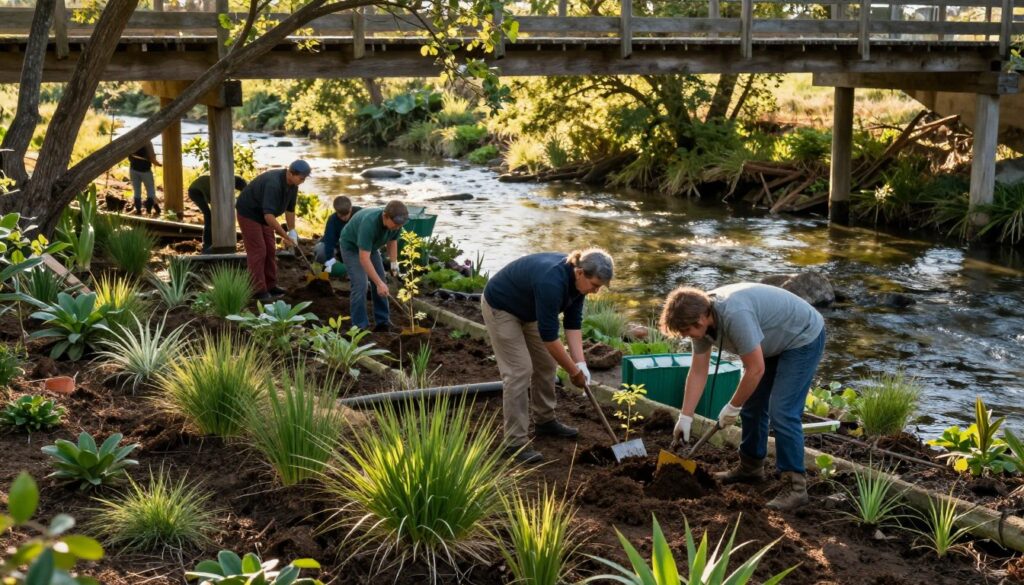
Choosing sustainable materials and practices is important. Using durable, recyclable materials lowers the project’s environmental impact. For example, recycled materials in repairs can greatly reduce harm.
Wetland Restoration During and After Projects
Restoring wetlands is a big part of protecting them. This includes fixing habitats and bringing back native plants and animals. The Wetland Pocket Guide offers insights into these efforts.
Water Quality Monitoring and Protection
Keeping water quality safe is critical. Monitoring water quality ensures it stays good. Using best practices for controlling erosion and sediment helps protect the water.
| Environmental Protection Technique | Description | Benefits |
|---|---|---|
| Low-Impact Access Methods | Using barges or pontoon boats to access the bridge | Reduces disturbance to the wetland ecosystem |
| Containment Technologies | Using cofferdams and silt curtains to contain the work area | Prevents the release of sediment and pollutants into the wetland |
| Sustainable Materials | Using durable, recyclable materials for bridge repairs | Reduces environmental footprint of the project |
Conclusion
We can make bridge maintenance in wetlands better for the environment. Using eco-friendly materials and sustainable methods helps a lot. Studies show that bridges with a certain design don’t harm the environment much.
For example, a study found that bridges with a specific ratio don’t hurt estuarine marshes. Using special trucks for bridge work is also good. These trucks use less fuel and make fewer emissions.
To protect wetlands, we need a detailed plan. This includes using green materials and careful construction. We should also plan to disturb the area as little as possible.
By doing this, we can lessen the harm caused by bridge upkeep. This helps keep wetlands healthy for a long time. For more tips on bridge maintenance, check out https://underbridgeplatforms.com/top-3-challenges-of-urban-bridge-maintenance-and-how-to-overcome-them/.
Recent Comments