

As a professional in bridge rehabilitation, I often ask: How can we balance infrastructure development with wildlife preservation? Bridges are more than just for cars; they’re also homes for wildlife, including bats. The National Cooperative Highway Research Program Project 25-25 Task 102 found bats in bridges across the lower 48 states. They use these bridges for important activities like raising their young and resting.
It’s important to consider bats when working on bridge rehabilitation projects. Using bat exclusion services helps protect these vital habitats. A study on acoustic deterrence for bat occupancy shows it’s a useful solution to reduce bat presence.
Key Takeaways
- Bats occupy bridges throughout the contiguous 48 states, serving as critical habitats.
- Effective bat exclusion services are key to reducing wildlife impact during bridge work.
- Innovative solutions like acoustic deterrence can help reduce bat presence in highway structures.
- Working together between wildlife experts and infrastructure developers is vital for success.
- Knowing bat behavior and bridge preferences is essential for planning exclusion measures.
Why Bat Exclusion Matters in Bridge Rehabilitation
Bat exclusion is key in bridge repair projects. It’s not just about following rules. It also helps keep bat colonies healthy. Bats are important, and their numbers are falling due to diseases.
Legal Requirements for Wildlife Protection During Bridge Work
Keeping bats safe during bridge work is a must. The guidelines for bat mitigation on roads explain these rules. For example, Oklahoma’s efforts to protect bats during a bridge project show how vital wildlife protection is.
Ecological Importance of Protecting Bat Colonies
Bats are vital for our environment. They help control insects, which means we use fewer pesticides. Here are some reasons why bat colonies are important:
| Ecological Benefit | Description | Impact |
|---|---|---|
| Insect Control | Bats eat insects, lowering pest numbers. | This cuts down pesticide use, making our environment healthier. |
| Pollination and Seed Dispersal | Some bats help pollinate and spread seeds. | This boosts plant diversity and keeps ecosystems balanced. |
| Ecosystem Engineering | Bats shape ecosystems with their roosting habits. | This creates homes for other animals, increasing biodiversity. |
Understanding bat colonies’ value helps us reduce bridge project impacts. By using good bat exclusion methods, we can protect these vital ecosystems.
Bat Exclusion Bridge Maintenance Platforms: Essential Tools for Compliance
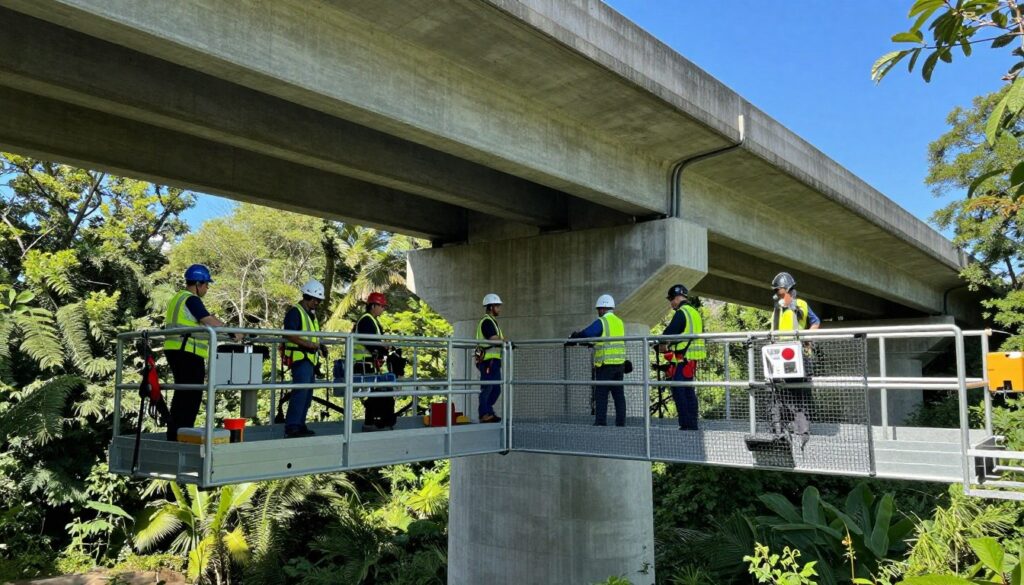
Bat exclusion bridge maintenance platforms are key for following wildlife protection rules during bridge fixes. They let workers safely get to where bats might be, making it easier to keep bats out.
Types of Platforms and Equipment for Effective Exclusion
There are many platforms and tools for keeping bats away, like underbridge platforms for safe bridge underside access. For example, Oklahoma’s Department of Transportation put up 20 fake roost panels on a bridge for Yuma bats. Learn more about underbridge platforms at https://underbridgeplatforms.com/safety-and-stability/.
Installation Techniques and Best Practices
Putting up bat exclusion platforms needs careful planning and doing. It’s important to make sure platforms are well attached and exclusion methods don’t bother bats too much. Studies, like one at https://www.nrgsystems.com/assets/resources/Efficacy-of-Acoustic-Deterrence-for-Bat-Occupancy-of-Highway-Structures_ICF_2021.pdf, help find the best ways to keep bats away.
My Approach to Bat Exclusion During Bridge Projects
My strategy for bat exclusion during bridge projects starts with a detailed assessment and planning. This careful approach protects bat colonies while also rehabilitating bridges.
Pre-Construction Assessment and Planning
The first step is to thoroughly assess the bridge for bat habitats. Surveys and monitoring help find and understand bat colonies. A study by the Oklahoma Department of Transportation shows this is key to reducing bridge construction’s impact on bats.
Implementation and Monitoring Strategies
After the assessment, we implement bat exclusion techniques. This might include using ultrasonic bat deterrents, as studied by the MnDOT. Research shows these methods can temporarily keep bats away from bridges.
Addressing Common Challenges in Bat Exclusion
Ensuring bats are treated humanely is a big challenge. We must use methods that exclude bats safely. Another challenge is avoiding project delays. Good planning and the right exclusion techniques help solve these problems.
| Exclusion Technique | Effectiveness | Humane Considerations |
|---|---|---|
| Ultrasonic Deterrents | High | Non-invasive, humane |
| Exclusion Devices | Medium | Requires careful installation |
| Netting | Low | Can be invasive if not done correctly |
By tackling challenges with the right strategies, we can successfully exclude bats during bridge projects. This not only follows wildlife protection laws but also helps save bat colonies.
Conclusion: Ensuring Successful Bridge Rehabilitation While Protecting Wildlife
Adding bat exclusion services to bridge fixes is key to less harm to bats. Using Best Management Practices (BMPs) and effective bridge maintenance platforms for wildlife helps. This way, we can fix bridges in a way that’s good for the environment.
Choosing the best bat exclusion methods is critical for bat protection during repairs. The National Cooperative Highway Research Program Project 25-25 Task 102 shows why we must solve bat and bridge conflicts. This is for the success of the project.
Putting wildlife first and using smart exclusion methods helps. This way, we can keep bat homes safe and make bridge fixes last longer.
Recent Comments