

Can a bridge’s integrity be kept safe during bearing replacement? The answer is yes, with precise platform positioning for high-accuracy alignment. This is a key part of bridge infrastructure maintenance.
Bridges need bearings to work well, and replacing them is a complex job. Advanced tech and special tools, like under-bridge access solutions, are key for precision. A recent LinkedIn post talks about the steps, including inspection, temporary supports, and careful replacement.
Using specialized platforms helps replace bearings safely and efficiently. A patent for a bearing replacement device shows how important precision and timing are.
Key Takeaways
- Precision is key for bearing replacement under bridges.
- Advanced tech and special tools are essential.
- Under-bridge access solutions improve safety and efficiency.
- Detailed inspection and planning are necessary.
- Temporary support systems are vital for successful replacement.
The Critical Role of Bridge Bearing Maintenance
Maintaining bridge bearings is key to keeping bridges safe and lasting long. These components allow bridges to move and handle different loads. But, they can wear out, corrode, and degrade over time.
Why Bridge Bearings Fail and Need Replacement
Bridge bearings can fail for many reasons, like too much load, bad installation, or harsh weather. Corrosion is a big problem, weakening the bearings and causing them to fail early. Regular checks and upkeep are vital to catch problems before they get worse. Experts say using the right design and maintenance can help avoid failures, as explained in this article.
Ignoring bridge bearing upkeep can lead to serious issues. A failed bearing can damage the bridge, raise maintenance costs, and even close the bridge. Studies show that regular inspections and quick fixes are key to avoiding these problems.
Safety and Structural Integrity Concerns
The safety and strength of bridges depend on their bearings. If the bearings fail, the bridge’s stability is at risk. This can lead to expensive repairs or even the need to replace the bridge. It’s essential to have good bridge bearing replacement services to keep bridges safe and sound.
| Cause of Failure | Consequence | Preventive Measure |
|---|---|---|
| Excessive Load | Premature Wear | Regular Inspections |
| Corrosion | Weakened Components | Protective Coatings |
| Improper Installation | Early Failure | Proper Installation Techniques |
For structural maintenance under bridges, special tools and methods are needed. This includes reaching the underside of bridges, which is hard to do. Companies that specialize in bridge maintenance contractors use the latest tech and techniques for safe and effective work. For more on fixing concrete under bridges, check out this page.
My Approach to Bearing Replacement Under Bridge Platforms
Replacing bearings under bridges needs a careful plan. I’ve learned this through years of under-bridge engineering services experience. My method aims for precision and safety in every step.
Specialized Equipment for Under-Bridge Access
Getting to the area under a bridge needs specialized equipment. I use top-notch under-bridge platforms for safe access. For more on under-bridge platform safety, see your ultimate under-bridge platform safety checklist.
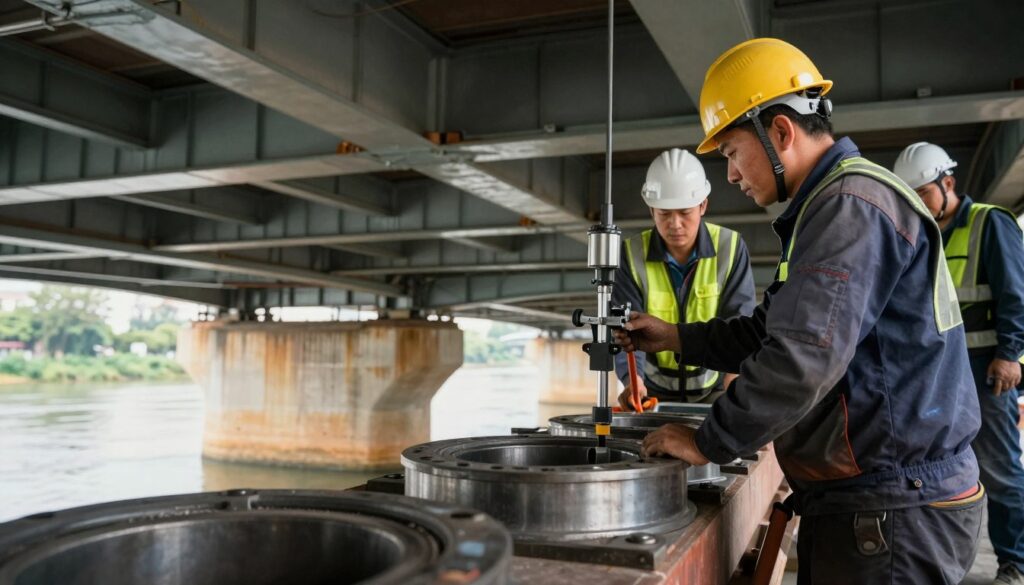
Precision Positioning Techniques
When placing new bearings, precision is key. I use advanced precision positioning techniques like air bearings and motion control systems. This ensures the bearings are aligned and work right.
Load Distribution During Replacement Operations
Even load distribution is essential during replacement. I plan and execute carefully to avoid stress on the bridge. For more on load capacities and choosing platforms, visit understanding load capacities and reach.
| Load Distribution Method | Description | Benefits |
|---|---|---|
| Hydraulic Jacking | Using hydraulic jacks to lift the bridge | Precise control over the lifting process |
| Temporary Support | Installing temporary supports under the bridge | Enhanced safety during the replacement process |
Ensuring Alignment Accuracy During Installation
Correct alignment of new bearings is vital for the bridge’s life and strength. I apply advanced alignment techniques and checks to ensure proper positioning. For more on jacking and lifting bridge bearings, see jacking and lifting of bridge bearings.
By using specialized equipment, precision methods, and careful planning, I ensure accurate and safe bearing replacement under bridges. This follows the best practices in bridge bearing replacement specialists.
Conclusion
Replacing bearings under bridge platforms is key to keeping bridges safe and strong. Advanced tools and equipment, like under bridge inspection platforms, help a lot. They make sure bridges last longer by aligning them accurately.
These platforms also make it safer to work on bridges. This is because they provide a stable place to work. It’s easier to install bearings precisely, as shown on under bridge inspection platforms.
Keeping bridges in good shape is important to avoid expensive repairs later. Using the right bearings, like polymer-based ones, is essential. They need little upkeep and last a long time, as explained on offshore bridge bearings.
By carefully replacing bearings and using the latest technology, we can keep bridges safe. This helps everyone by making sure bridges are reliable and safe to use.
Recent Comments