
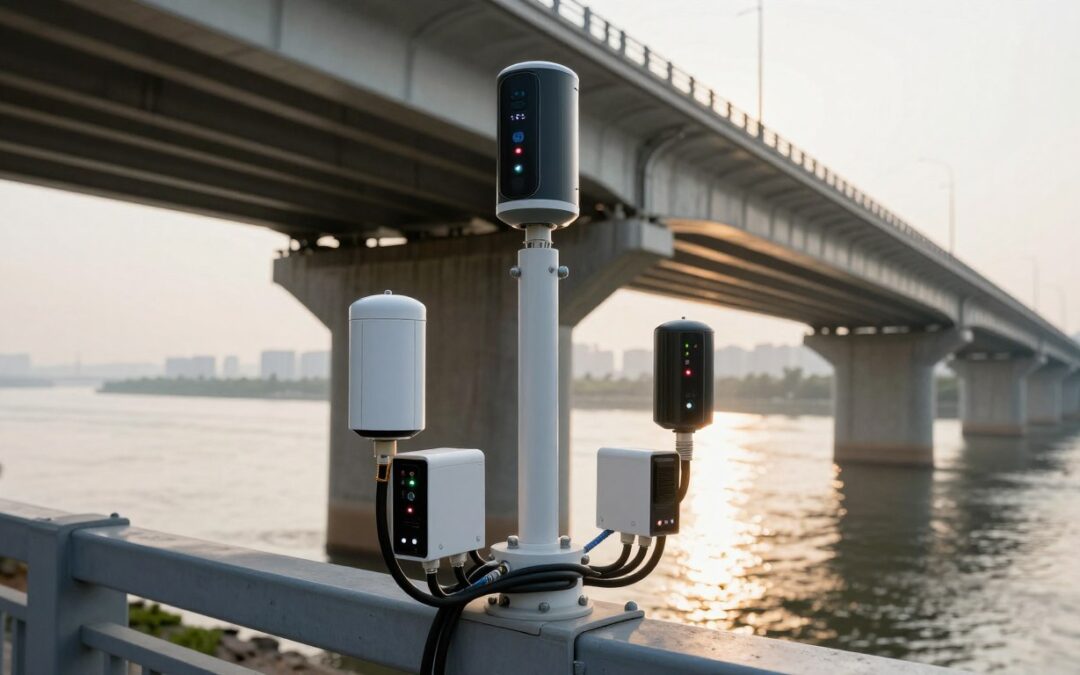
The world’s infrastructure is getting older, and it’s critical to watch over bridge health. Australia has over 53,000 bridges, and the U.S. has about 600,000. Many of these bridges are past their prime, raising the risk of collapse. Can bridge monitoring systems help solve this problem?
I look into how advanced sensor technologies on under bridge platforms can monitor in real-time. This lets us spot problems early and make maintenance better. With structural health monitoring, owners and managers can learn a lot about their bridges.
Key Takeaways
- Real-time monitoring of bridge structural health using advanced sensor technologies.
- Early detection of problems to enhance maintenance.
- Insights into bridge condition for better management decisions.
- Role of under bridge platforms in structural health monitoring.
- Importance of non-destructive SHM approaches for ongoing monitoring.
The Critical Need for Bridge Monitoring
Over 60 bridges have collapsed worldwide in the last decade. This shows how important bridge maintenance solutions are. Bridge failures are deadly and can’t be fixed, making safe management essential.
America’s Aging Infrastructure Challenge
The U.S. faces a big challenge with its old infrastructure. Many bridges are close to or past their use-by date. This is risky and could lead to major failures. New inspection technologies are key to solving these problems.
Why Traditional Inspection Methods Fall Short
Old ways of checking bridges are often based on what inspectors see or do manually. These methods are not always reliable and can be dangerous. Using remote sensing technologies makes inspections safer and more accurate.
| Inspection Method | Frequency | Accuracy |
|---|---|---|
| Traditional Visual Inspection | Periodic | Subjective |
| Advanced Remote Sensing | Real-time | High |
In conclusion, we need new ways to monitor our infrastructure. Using smart sensors, we can make our old bridges safer. For more on how tech is changing bridge checks, visit The Role of Technology in Bridge Inspection and.
How My Smart Sensors Under Bridge Platforms Work
Advanced sensor technology is key to my bridge monitoring solutions. It gives real-time insights into bridge conditions. This tech is vital for smart infrastructure management. It helps bridge owners make informed decisions with accurate data.
Advanced Sensor Types and Their Functions
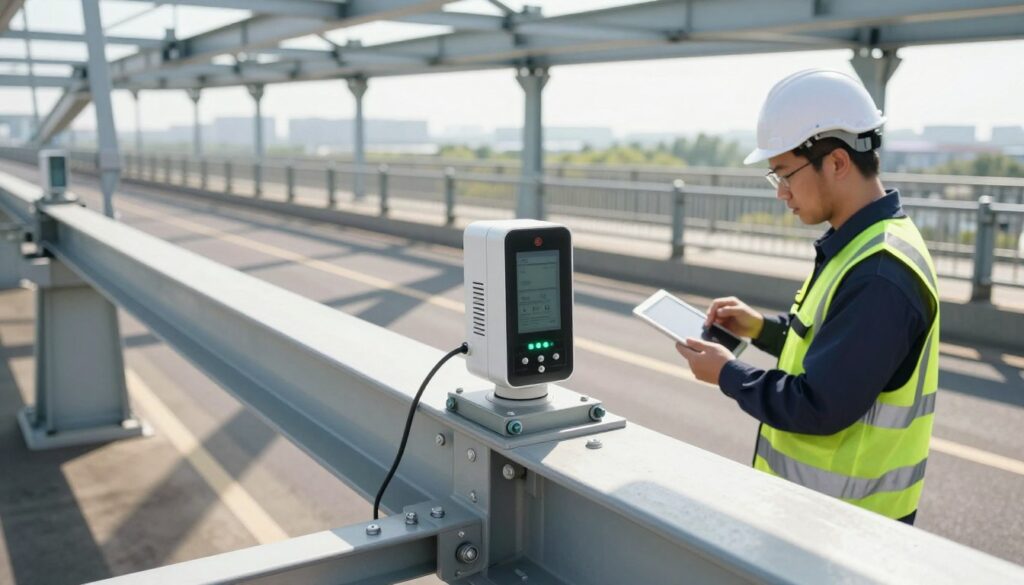
My smart sensors use various advanced types, like accelerometers, inclinometers, and strain gauges. These sensors together give a full view of a bridge’s health. For example, accelerometers track the bridge’s movements, and strain gauges check how much it deforms under load.
This mix of advanced bridge inspection techniques offers a detailed look at the bridge’s state.
Data Collection and Real-Time Analysis Systems
The sensors send data to a central system for analysis. This involves several steps, like data gathering and creating a virtual model. It also includes connecting the physical and virtual assets and analyzing the structural health.
By using advanced data analysis techniques, my system spots issues early. This leads to proactive maintenance and better safety.
Installation and Maintenance Considerations
Installing my smart sensors needs careful planning to place them right. Maintenance is easy, thanks to remote monitoring. This lets us quickly spot any problems.
For more on IoT-based bridge monitoring systems, check out IoT-based bridge monitoring systems. This makes maintenance simple, cutting down on costs and the need for physical checks.
Real-World Benefits of My Monitoring Solutions
Smart sensors are changing bridge maintenance by giving real-time data on how strong the structure is. This new way of using bridge monitoring systems makes maintenance more efficient and effective.
Early Detection of Structural Weaknesses
Remote sensing technologies in bridge monitoring help spot problems early. This early warning system prevents accidents and saves money on repairs.
Cost Savings Through Predictive Maintenance
Predictive maintenance, thanks to my monitoring solutions, saves a lot of money. The cost of maintaining bridges can be as high as 2% of the construction cost each year. For a 100-year-old bridge, this can double the cost of building it.
By using bridge monitoring systems, we can plan maintenance better and spend less.
| Bridge Type | Annual Maintenance Cost | 100-Year Maintenance Cost |
|---|---|---|
| Suspension Bridge | 0.4% of construction cost | 40% of construction cost |
| Cable-Stayed Bridge | 0.8% of construction cost | 80% of construction cost |
| Truss Bridge | 1.2% of construction cost | 120% of construction cost |
Case Study: Improving Safety on Aging Bridges
My monitoring solutions are making a big difference for aging truss bridges. By using articulating under bridge platforms, inspectors can check these bridges safely and thoroughly. This improves safety for everyone.
Conclusion: Shaping the Future of Infrastructure Monitoring
Smart sensors under bridge platforms are changing how we monitor infrastructure. They use advanced tech like Digital Twins for better maintenance. This makes bridge upkeep more proactive and efficient.
Digital Twins, first used by NASA in 1969, help monitor bridge health smartly. This tech, paired with real-time data analysis, spots problems early. It also helps plan maintenance, saving money and keeping people safe.
Platforms like those from Under Bridge Platforms are key for installing and keeping up these sensors. They make it easier and safer to reach bridge areas that are hard to get to. This helps keep bridges in good shape for longer.
Looking ahead, using smart sensors under bridges will be vital for our infrastructure’s safety and longevity. By using these new tools, we can manage our infrastructure better. This means more focus on upkeep and less on repairs.
Recent Comments