
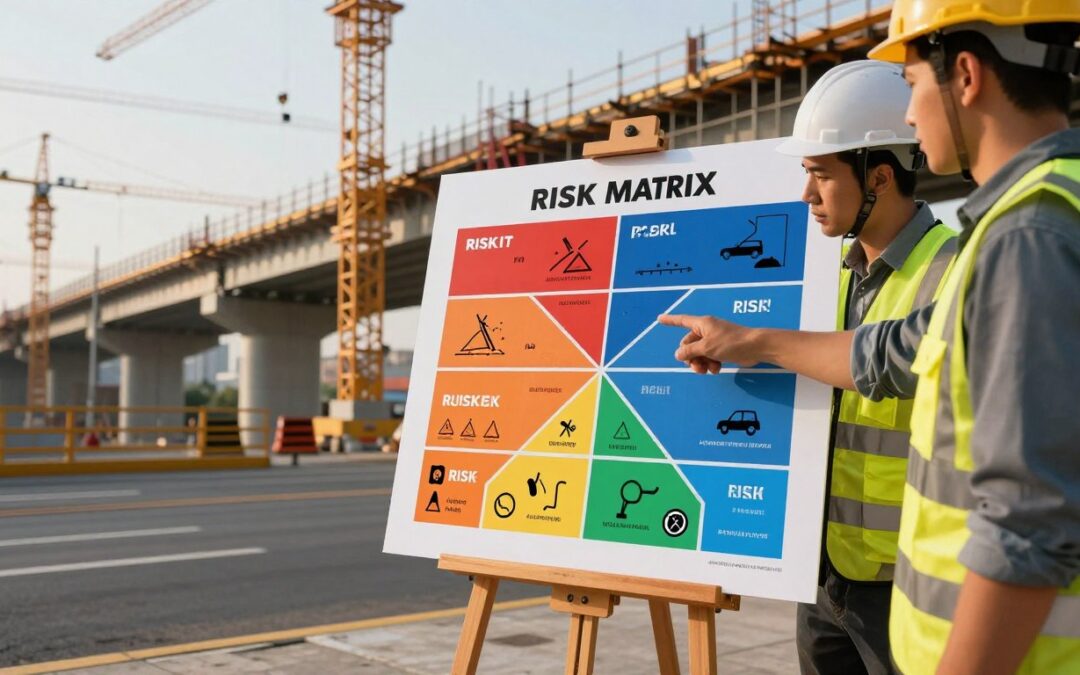
Do you know the dangers in under-bridge construction sites? There are many risks, like structural failures and equipment problems. If you work on these projects, you know how vital bridge construction safety is. But have you thought about how a risk matrix can help?
A risk matrix is a key tool for spotting, checking, and sorting risks, as the Risk Management Guideline shows. It helps you tackle risks early and keep the work area safe. For example, tools like the Hydra Platform have safety features like a Dual Side Hydraulic outrigger system. These features make operations safer under bridges.
Key Takeaways
- Understanding the importance of risk matrices in under-bridge work zones
- Identifying possible hazards and risks in bridge construction
- Using risk matrices to sort and lessen risks
- Putting in safety steps, like those in the Hydra Platform
- Boosting bridge construction safety with early risk management
Understanding Under Bridge Work Zone Risk Matrices
Under-bridge work zones need careful planning and risk checks to keep everyone safe. Good construction site safety planning is key here. Many dangers can come from different places.
What Is a Risk Matrix and Why It Matters for Bridge Work
A risk matrix helps figure out and sort risks by how likely they are and how big the impact could be. It’s vital for under-bridge work to spot dangers like weather, structural issues, and traffic problems. The Risk Management Guideline says it’s important to find and check risks in construction projects.
Components of an Effective Risk Matrix
A good risk matrix has a few important parts:
- Spotting possible dangers
- Looking at how likely and big each danger is
- Sorting risks by how serious and likely they are
Unique Hazards in Under-Bridge Environments
Under-bridge areas have special dangers, like weather, structure, and traffic risks. For example, strong winds can shake under-bridge platforms, as talked about in this article on platform stability. Knowing these risks is key for risk assessment for road work and keeping transportation infrastructure safety.
Environmental, Structural, and Traffic-Related Risks
| Risk Category | Description | Mitigation Strategies |
|---|---|---|
| Environmental Risks | Weather conditions, water flow, and natural disasters | Monitoring weather forecasts, designing for natural hazards |
| Structural Risks | Bridge integrity, equipment failure | Regular inspections, maintenance of equipment |
| Traffic-Related Risks | Vehicle accidents, traffic congestion | Traffic management plans, safety barriers |
Creating Effective Under Bridge Work Zone Risk Matrices
Managing risks in under-bridge work zones starts with a detailed risk matrix. This tool helps spot, evaluate, and lower risks linked to bridge work or upkeep.
Step 1: Identify Possible Hazards
It’s key to do a full site check to find hazards. Look at the work area, tools, and tasks. For example, you might find dangers like falling things, unstable structures, or weather issues.
Conducting Thorough Site Assessments
Checking the site well is important. Look at the bridge’s strength, falling dangers, and weather. Use tools like the ultimate under-bridge platform safety checklist for a complete check.
| Hazard Category | Potential Hazards | Mitigation Strategies |
|---|---|---|
| Structural | Bridge instability, falling debris | Regular inspections, structural reinforcement |
| Environmental | Weather conditions, water flow | Weather monitoring, flood protection measures |
| Operational | Equipment failure, worker error | Regular equipment maintenance, worker training |
Step 2: Assess Probability and Severity
It’s vital to measure risk with numbers. Give each hazard a score for how likely and severe it is. For more on this, see risk management guidelines.
Quantifying Risk Factors with Numerical Scales
Use a scale, like 1-5, to rate hazards. A high score means a hazard is serious and likely to happen, needing quick action.
Step 3: Plot Risks on Your Matrix
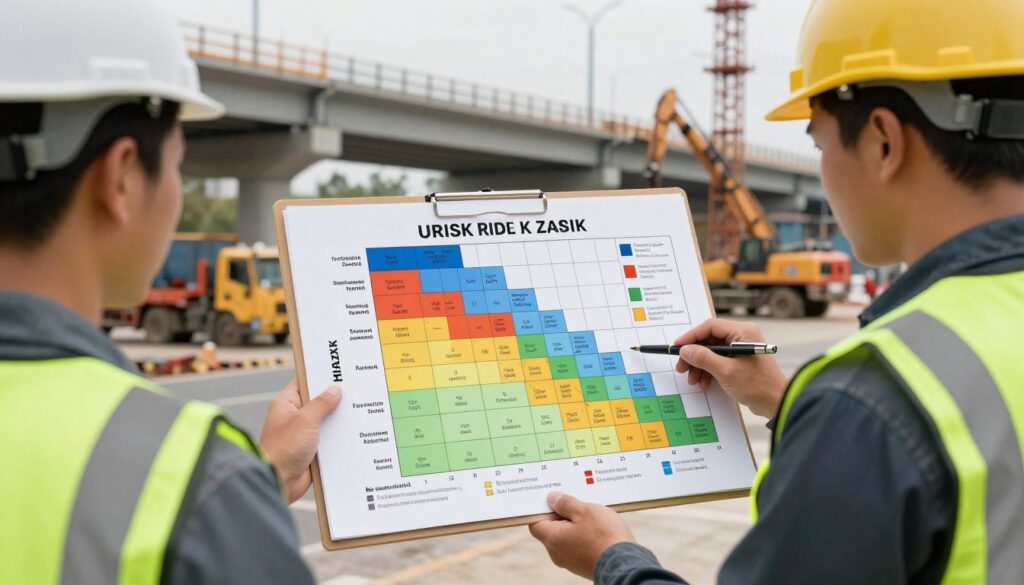
After assessing risks, plot them on the matrix. Use the scores to place hazards. Then, use colors and priorities to show the most critical ones.
Color-Coding and Prioritization Techniques
Color-coding, like red for high-risk and green for low, helps focus on the most urgent risks. This ensures bridge work zone mitigation strategies are effective and boosts construction zone safety measures.
By following these steps and making a detailed risk matrix, managers can greatly improve road project risk management. This approach not only makes the project safer but also more successful.
Implementing Risk Mitigation Strategies
Effective risk mitigation in under-bridge work zones requires a detailed plan. This plan includes identifying high-risk areas, creating safety protocols for each site, and training workers. By doing this, construction teams can lower the chance of accidents and make the work area safer. This careful approach is key for bridge construction safety and project success.
Addressing High-Risk Areas First
Spotting and fixing high-risk spots is a major step in reducing risks in under-bridge work zones. It means doing detailed risk assessments to find hazards and then taking steps to lessen these risks. By focusing on high-risk areas first, teams can use their resources better.
Developing Site-Specific Safety Protocols
Creating safety plans that fit each under-bridge work zone is essential. These plans must consider the bridge’s design, the area around it, and the tasks being done. For more tips on safety, check out under bridge inspection platforms.
Training Crews on Risk Awareness and Response
Teaching crews about risks and how to handle them is vital. By training workers on the dangers of under-bridge work zones and the safety steps, teams can build a safety-first culture. This training is critical for construction site safety planning and makes sure crews can act fast in emergencies.
Conclusion
Creating a strong risk matrix is key to keeping workers safe in under-bridge work zones. Project managers can follow steps from this article to spot, check, and lower risks. This is important for road, transportation, and bridge safety.
A good risk matrix helps teams focus on the biggest risks. They can make safety plans for each site and teach workers about risks. For more help, check out the Canadian risk matrix framework. It offers great tips on managing risks.
By adding risk management to their work, construction teams can cut down on dangers. This makes the work place safer. As the construction world grows, using risk management early on is key to success in building projects.
Recent Comments