
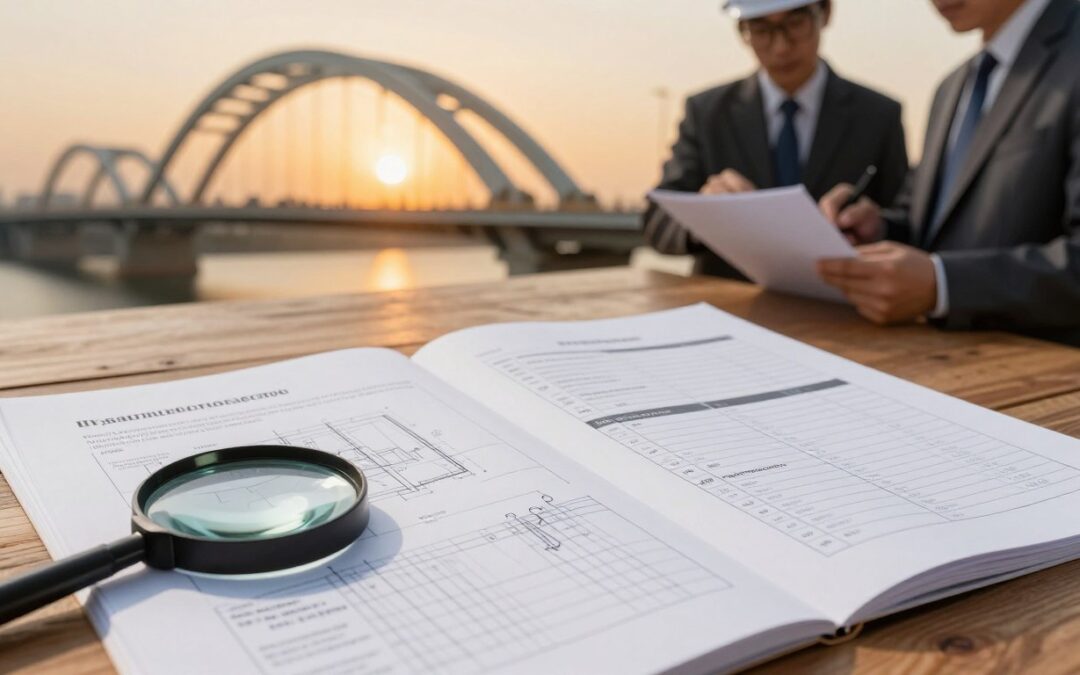
Have you ever wondered how bridge owners can keep their structures safe and lasting after a platform-assisted maintenance check?
I know how key it is to make detailed owner’s manuals for bridge clients. These guides help bridge owners take good care of their structures. They can learn the best maintenance practices from a bridge maintenance guideline.
Using under-bridge inspection platforms has changed how we do inspections. It brings safety and easier access, as shown in the top benefits of under-bridge inspection platforms.
Key Takeaways
- Comprehensive owner’s manuals are key for good bridge upkeep.
- Platform-assisted maintenance makes inspections more accurate.
- Detailed guides help bridge owners keep their structures in top shape.
- Best maintenance practices are in bridge maintenance guidelines.
- Under-bridge inspection platforms boost safety and access.
The Value of Comprehensive Bridge Documentation
Detailed bridge assessment manuals are key to avoiding future problems. They help bridge owners make smart choices about repairs and upkeep. The Federal Highway Administration (FHWA) says a good bridge management system is essential for keeping bridges in good shape.
How Detailed Manuals Prevent Future Structural Issues
With the right info, bridge owners can spot issues early. This stops big problems before they start. A bridge maintenance handbook outlines the best ways to keep bridges in top condition. For example, it covers how to keep under-bridge platforms stable in windy conditions, as explained in this article.
Bridging the Knowledge Gap Between Inspectors and Owners
Good bridge documentation closes the gap between inspectors and owners. It gives a clear picture of the bridge’s state. This makes talking and making decisions easier.
The Financial Benefits of Proper Maintenance Documentation
Keeping maintenance records right can save a lot of money. It stops expensive fixes by catching problems early. A bridge assessment manual helps owners focus on what needs to be done first.
| Benefits | Description | Impact |
|---|---|---|
| Prevents Structural Issues | Early detection of problems | Reduces costly repairs |
| Bridges Knowledge Gap | Clear understanding of bridge condition | Facilitates communication |
| Financial Savings | Prioritized maintenance activities | Substantial cost savings |
Essential Elements of Post Inspection Manuals for Bridge Maintenance
A good post-inspection manual is key for bridge upkeep. I make sure these manuals have important parts. They help keep the bridge in good shape for a long time.
Structural Assessment Findings and Recommendations
The manual starts with a detailed look at the bridge’s structure. It includes what needs fixing or more checks. This part is key for bridge owners to know how their bridge is doing.
Preventative Maintenance Schedules and Procedures
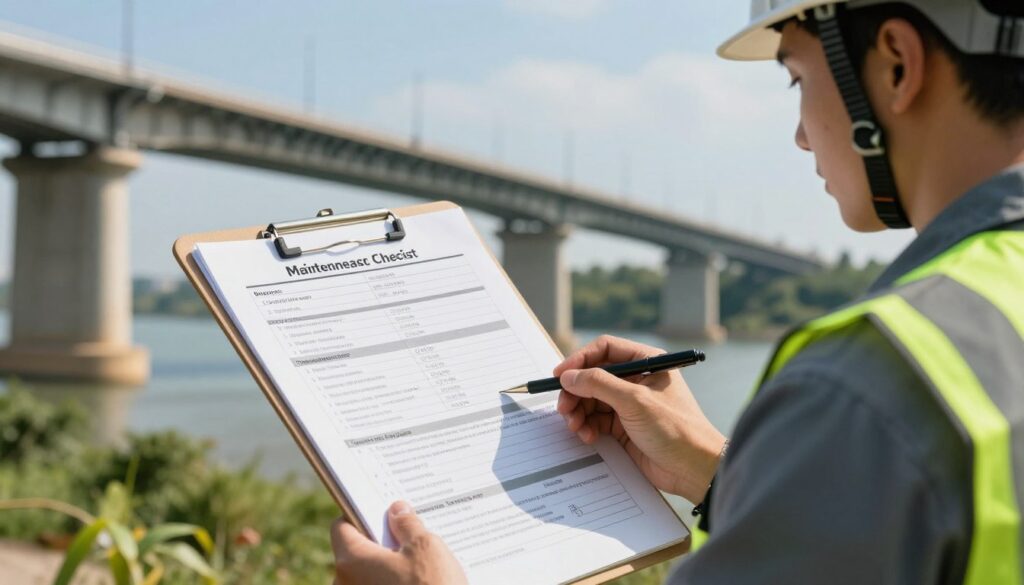
A bridge maintenance checklist is a must for keeping things running smoothly. I add schedules and steps to help bridge owners keep up with regular care. This lowers the chance of big repairs later.
Visual Documentation: Photos, Diagrams, and Condition Maps
Photos, diagrams, and maps are super helpful for seeing the bridge’s state. They let owners and maintenance teams spot problems fast.
Digital vs. Physical Documentation Options
Bridge owners must choose between digital and physical documents. I suggest thinking about each type’s benefits. For example, digital is easy to access and update, but physical is tangible and doesn’t need tech. Check out Transport Canada’s Bridge Safety Management for more.
| Documentation Type | Advantages | Disadvantages |
|---|---|---|
| Digital | Accessible, easily updated, and eco-friendly | Needs digital skills and setup |
| Physical | Real, no tech needed | Takes up space, can get damaged, hard to update |
For more on bridge upkeep, like using underbridge platforms for repairs, check out Underbridge Platforms.
My Process for Creating Customized Bridge Assessment Manuals
I specialize in making bridge maintenance manuals that fit each owner’s needs. My process makes sure the manuals are detailed and easy to use.
Collecting and Organizing Platform-Assisted Inspection Data
The first step is to gather and sort data from inspections. This step is key to making accurate manuals.
Categorizing Findings by Severity and Location
I sort the findings by how serious they are and where they are. This helps focus on the most urgent repairs first.
Documenting Hard-to-Access Areas Inspected via Platform
I pay extra attention to areas hard to reach. This gives a full picture of the bridge’s state.
Translating Technical Information into Actionable Guidance
Next, I turn technical data into simple steps for owners to follow. This includes making checklists and protocols that are clear and doable.
Creating Bridge-Specific Maintenance Checklists
I make checklists for each bridge’s unique needs. For example, a checklist might cover checking for corrosion or inspecting expansion joints.
Developing Easy-to-Follow Maintenance Protocols
The maintenance protocols are designed to be easy and straightforward. This way, owners can keep their bridges in good shape. For more on choosing the right equipment for under-bridge inspections, visit Under Bridge Platforms.
Finalizing and Delivering Client-Friendly Documentation
The last step is to finalize and deliver the documents in a way clients can easily access. This might include digital formats for updates and access.
| Documentation Element | Description | Benefit |
|---|---|---|
| Inspection Data | Detailed findings from platform-assisted inspections | Accurate condition assessment |
| Maintenance Checklists | Bridge-specific tasks for maintenance | Prioritized maintenance activities |
| Maintenance Protocols | Easy-to-follow procedures for maintenance | Effective structure maintenance |
By following this process, I help bridge owners keep their structures safe and lasting. For more on bridge inspection, see Bridge Inspection Requirements.
Conclusion: Empowering Bridge Owners Through Detailed Documentation
Creating detailed owner’s manuals for bridge clients after maintenance is key. It helps bridge owners keep their structures in top shape. By giving them bridge inspection guides, they can make smart choices about upkeep and repairs. This ensures their bridges last longer.
A good bridge management system is vital for bridge longevity, studies show. Using advanced tech like AI for monitoring can make bridges safer and more efficient. This is backed by recent research. With these tools and clear maintenance plans, owners can keep their bridges running smoothly.
Keeping aging bridges in good shape is a big challenge. With 40% of U.S. bridges over 50, strong maintenance is essential. Companies like Under Bridge Platforms offer innovative solutions, like rental equipment with safety features, on their website. With these and detailed guides, owners can keep their bridges safe and sound.
Recent Comments